When people plan a new roof, the roofing sheet usually gets most of the attention. Buyers compare sheet profiles, colours, coatings, thicknesses, and prices before making a decision. But a roof is not made from sheets alone.
Behind a durable roofing system are several components that may look small but perform critical functions. Purlins support the roofing sheets. Screws secure them to the structure. Flashing protects vulnerable joints. Washers help seal fastening points. Together, these components determine how well the roof handles rain, wind, movement, and everyday exposure.
This is particularly important in Assam and the Northeast, where roofs can experience heavy rainfall, humidity, seasonal storms, and challenging weather conditions.
At Dura Roof, roofing is approached as a complete system rather than simply a sheet placed over a building. Understanding the role of every component can help homeowners, builders, contractors, and businesses make better roofing decisions.
What Are Purlins and Why Are They Important?
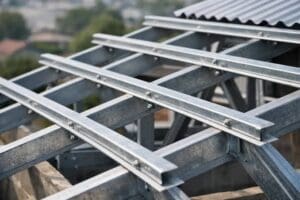
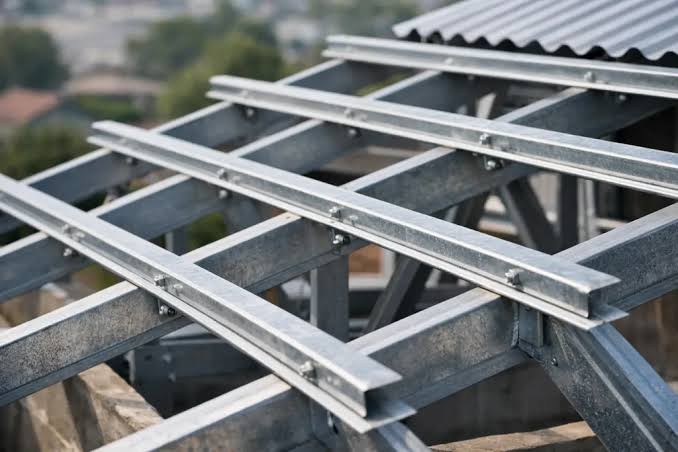
Purlins are structural members positioned across the roof framework to support the roofing sheets.
They essentially form the intermediate support between the main roof structure and the roofing material. The roofing sheets are then fixed to these supporting members using suitable fasteners.
A simple way to understand the relationship is:
Main roof structure → Purlins → Roofing sheets → Fasteners
If the purlins are poorly designed, incorrectly spaced, or unsuitable for the roof’s structural requirements, even a good-quality roofing sheet may not perform as intended.
Properly designed purlins can help provide:
- Adequate support for roofing sheets
- Better load distribution
- Reduced sheet movement
- A stable surface for fastening
- Improved overall roof rigidity
- Proper alignment of roofing sheets
This is why purlins deserve as much attention as the visible roofing material when planning a roof.
Why Do C Shaped Purlins Matter as Much as the Roofing Sheets?
One commonly used profile in steel roof construction is the C shaped purlin.
Its cross-section resembles the letter “C”, providing a practical structural member for supporting roofing sheets in various applications.
C-shaped purlins can be important because they influence how the roofing sheets are supported and fastened. The correct size, thickness, spacing, and connection method depend on the structural design of the building.
1. They support the roofing sheets
Roofing sheets need adequate intermediate support. Properly positioned C-shaped purlins provide a stable base for securing the sheets.
2. They influence roof stability
The purlin system forms part of the overall roof framework. Appropriate spacing and structural design can help control deflection and movement.
3. They affect sheet installation
When purlins are correctly aligned and spaced, roofing sheets can be installed and fastened more effectively.
4. They contribute to long-term performance
Roof durability depends on the interaction between the sheets, supporting structure, fasteners, and weatherproofing details—not on the sheet alone.
This is why Dura Roof encourages a complete roofing approach. Choosing a quality roofing sheet is important, but so is ensuring that the structure supporting it is properly planned.
C Shaped Purlins vs Z Shaped Purlins
Both C shaped purlins and Z shaped purlins are used in steel roofing systems, but they are not interchangeable in every situation.
The choice depends on factors such as the building design, span, loads, purlin spacing, connection requirements, and structural calculations.
| Feature | C Shaped Purlins | Z Shaped Purlins |
|---|---|---|
| Cross-section | C-shaped | Z-shaped |
| Common use | Various roof and wall framing applications | Roof and wall framing, including suitable continuous arrangements |
| Connection | Depends on structural design | Can allow overlapping at supports in suitable designs |
| Selection | Based on span, load and design | Based on span, load and design |
| Best choice | Depends on the specific structure | Depends on the specific structure |
There is no universal rule that one profile is always better.
The right purlin should be selected according to the engineering requirements of the building.
When Should Z Shaped Purlins Be Used Instead of C Shaped Ones?
Z shaped purlins can be advantageous in certain roof designs, particularly where longer spans or overlapping arrangements are required.
One characteristic of Z sections is that they can be overlapped at supports in appropriately designed systems. This can allow continuity across multiple spans and may be useful in certain commercial, industrial, or larger roofing structures.
However, choosing between Z and C profiles should not be based simply on the profile shape.
Factors that should be considered include:
- Roof span
- Design loads
- Wind exposure
- Purlin spacing
- Roof geometry
- Connection details
- Steel thickness
- Section properties
- Overall structural requirements
For any major roofing project, the purlin system should be determined as part of the structural design.
The Roofing Sheet Is Only as Strong as Its Support System
Imagine investing in a durable roofing sheet but installing it over an inadequately designed support structure.
The sheet may be capable of handling demanding conditions, but the overall roofing system can still have weaknesses.
This is why Dura Roof roofing solutions should be considered together with the structural framework and installation requirements.
A properly planned roof considers:
Roofing sheet + purlins + fasteners + flashing + drainage + installation
Each element has a different role, but they ultimately work toward the same objective: creating a roofing system capable of protecting the building.
Why Roofing Screws Matter More Than You Think
After purlins provide the necessary support, roofing sheets need to be securely attached.
This makes the choice of fasteners extremely important.
Roofing screws are exposed to rain, humidity, temperature changes, and environmental conditions. They also have to accommodate the connection between the roofing sheet and supporting structure.
Poorly selected or improperly installed fasteners can create potential weak points.
Common issues include:
- Water entry around screw points
- Loose roofing sheets
- Damaged sheet surfaces
- Corrosion around fasteners
- Damaged sealing washers
- Poor connection between sheet and support
Therefore, the fastener should be treated as an important part of the roofing system rather than an inexpensive accessory.
Why Are Self Drilling and Tapping Screws Preferred for Roofing?
Self drilling and tapping screws are designed to simplify fastening by combining drilling and thread-forming functions in the screw itself.
When correctly selected for the roofing assembly, they can make installation more efficient and help create a consistent connection between roofing sheets and metal supports.
Faster installation
The integrated drilling point can reduce the need for separate drilling operations in suitable applications.
Efficient fastening
A correctly selected screw can provide a practical connection between the roofing sheet and supporting metal structure.
Fewer installation steps
The drilling and fastening process can be combined, making installation more convenient.
Suitable options for metal roofing systems
Different self-drilling screws are available for different sheet thicknesses, support materials, coatings, and environmental conditions.
However, the correct screw must always be selected for the particular roofing system.
Using a self-drilling screw does not automatically guarantee a leak-free roof. Installation quality matters just as much.
The Washer Under the Screw Can Make a Big Difference
A roofing screw may look simple, but the sealing washer underneath it performs an important function.
The washer helps seal the penetration created by the fastener and reduces the possibility of water entering around the screw.
But the washer must be installed correctly.
If the screw is over-tightened:
The washer may become excessively compressed or damaged, and the roofing sheet itself can be deformed.
If the screw is under-tightened:
The connection and sealing may not be adequate.
The goal is therefore not to tighten every screw as much as possible. The fastener needs to be installed correctly according to the roofing system and manufacturer’s recommendations.
Flashing: The Detail That Protects Vulnerable Roof Areas
A large roofing sheet can effectively shed rainwater across its surface, but roofs contain several areas where water can potentially enter.
These include:
- Roof-to-wall junctions
- Roof edges
- Openings
- Changes in roof direction
- Valleys
- Intersections with other structures
This is where roof flashing becomes important.
Flashing uses specially shaped pieces of material to help direct water away from vulnerable joints and transitions.
At Dura Roof, these details are an important part of thinking about roofing as a complete weather-protection system.
What Role Does Apron Flashing Roof Installation Play in Preventing Leaks?
An apron flashing roof detail is commonly associated with areas where a sloping roof meets a vertical wall or similar structure.
This junction can become vulnerable because rainwater travelling down the wall can reach the roof-wall intersection.
Properly designed and installed apron flashing helps manage this water and directs it away from the vulnerable joint.
It can help:
- Protect roof-to-wall intersections
- Redirect rainwater
- Reduce water entry
- Protect underlying roofing components
- Improve weather resistance around junctions
However, flashing is not simply a metal strip placed over a joint.
Its performance depends on correct dimensions, overlaps, fixing, integration with the roofing system, and appropriate sealing where required.
Step Flashing for Roof: Another Important Water-Shedding Detail
Step flashing for roof applications are commonly used where a sloping roof meets a vertical wall.
Rather than using one continuous piece, step flashing consists of individual pieces arranged progressively along the roof slope.
Each piece overlaps the next in a way that helps water move outward and downward rather than behind the flashing.
How Does Step Flashing for Roof Edges Protect Against Water Seepage?
The principle is straightforward:
Water flows over the upper flashing piece → reaches the lower piece → continues away from the wall and roof junction.
The overlapping arrangement helps prevent water from finding a direct path into the roof structure.
But correct installation is critical. Poor overlaps, incorrect positioning, inadequate fixing, or damaged flashing can compromise its performance.
Why Flashing Matters During Heavy Rainfall
During light rainfall, a poorly detailed junction may not immediately show a problem.
Heavy rainfall is different.
Large volumes of water can quickly expose weaknesses around roof-wall intersections, fasteners, edges, and overlaps.
For buildings in Assam and the Northeast, where intense rainfall can occur during the monsoon, proper water management should therefore be considered during the design and installation stage—not after a leak appears.
Purlins, Screws and Flashing: One Roofing System
A durable roof isn’t created by one component.
Each part performs a different function:
| Roofing Component | Primary Role |
|---|---|
| Roofing sheets | Provide the main weather barrier |
| Purlins | Support the roofing sheets |
| Self-drilling screws | Secure sheets to suitable supports |
| Sealing washers | Help protect fastening points |
| Apron flashing | Protect roof-to-wall transitions |
| Step flashing | Manage water at sloping roof-wall junctions |
| Drainage system | Direct accumulated rainwater away |
This is why Dura Roof takes a complete-system perspective when discussing roofing requirements.
A roofing sheet cannot compensate for poor structural support. Good purlins cannot compensate for poorly installed fasteners. Proper screws cannot compensate for badly detailed flashing.
The components need to work together.
Common Roofing Mistakes That Can Lead to Leaks
Many roofing problems are not caused by the roofing sheet itself. They can result from small installation or design decisions.
1. Incorrect purlin spacing
If purlins are spaced without considering structural requirements and sheet specifications, the roof may not receive adequate support.
2. Choosing fasteners only by price
The cheapest screw isn’t necessarily the appropriate screw for a roofing system.
3. Over-tightening screws
Excessive tightening can damage the washer and deform the roofing sheet.
4. Under-tightening screws
Insufficient tightening can compromise the connection and sealing.
5. Ignoring flashing details
Roof-wall junctions and other vulnerable transitions require proper detailing. Sealant alone should not be considered a replacement for suitable flashing design.
6. Incorrect sheet overlaps
Poorly executed overlaps can create potential pathways for water to enter.
7. Mixing incompatible materials
Material compatibility should be considered, particularly in humid and wet environments where corrosion can become a concern.
How to Plan a Reliable Roofing System
Whether you’re constructing a new building or replacing an old roof, consider these steps.
Step 1: Understand the building requirements
Identify the building type, roof span, intended use, location, and environmental exposure.
Step 2: Plan the structural support
Determine the appropriate purlin profile, size, thickness, spacing, and connections based on the structural design.
Step 3: Select suitable roofing sheets
Consider the sheet profile, material, thickness, coating, application, and environmental conditions.
Step 4: Select compatible fasteners
Choose suitable self drilling and tapping screws and sealing washers for the roofing sheet and supporting structure.
Step 5: Plan flashing details
Identify roof-wall junctions, edges, openings, valleys, and other areas that require water-shedding details.
Step 6: Focus on installation
Even quality roofing materials require proper installation. Sheet alignment, screw placement, tightening, overlaps, flashing, and drainage should all be handled carefully.
Why Roofing Details Matter in Assam and the Northeast
The Northeast presents specific challenges for roofing because buildings can be exposed to:
- Heavy seasonal rainfall
- High humidity
- Strong weather conditions
- Temperature fluctuations
- Long periods of moisture exposure
For this reason, a roof should be selected and installed according to the conditions it will actually face.
At Dura Roof, understanding the regional context is an important part of providing practical roofing solutions. A roof for Assam or the wider Northeast should be approached with attention to durability, water management, structural support, fastening, and maintenance.
Why Choose Dura Roof for Your Roofing Requirements?
When choosing a roofing solution, focusing only on the visible sheet can mean overlooking the components that determine how the system performs.
Dura Roof provides roofing solutions with a focus on practical performance and the requirements of buildings across Assam and the Northeast.
Whether you’re planning a residential roof, commercial building, warehouse, or other structure, Dura Roof can help you think beyond the sheet and consider the broader roofing requirements.
A well-planned roofing system considers:
- Suitable roofing sheets
- Appropriate purlin support
- Compatible fasteners
- Proper flashing
- Effective water drainage
- Correct installation practices
- Long-term maintenance requirements
Choosing Dura Roof means approaching roofing with a focus on the complete system—not simply selecting a sheet based on appearance or initial price.
Build a Better Roof with Dura Roof
A roof has to do more than look good.
It needs to provide dependable protection against the weather while remaining properly supported and securely fastened.
That’s why the small components matter.
Purlins support. Screws secure. Flashing protects. Roofing sheets shield.
When these elements are selected and installed appropriately, they work together to create a more dependable roofing system.
With Dura Roof, make your roofing decision based on the complete system and the conditions your building will face.
Choose the right roofing solution. Choose Dura Roof.
Frequently Asked Questions
1. When should Z shaped purlins be used instead of C shaped ones?
Z shaped purlins may be suitable for certain structures involving longer spans, overlapping arrangements, or continuous purlin systems. C-shaped purlins may be appropriate for other roof designs. The correct choice depends on structural calculations, loads, spans, spacing, and connection details.
2. Why are self drilling and tapping screws preferred over standard fasteners for roofs?
Self drilling and tapping screws can make roofing installation more efficient because their design allows drilling and thread formation during fastening in suitable applications. The correct screw, washer, and installation method should be selected according to the roofing system.
3. What role does apron flashing roof installation play in preventing leaks?
An apron flashing roof detail helps protect roof-to-wall junctions by directing water away from vulnerable areas. Proper design, overlap, fixing, and installation are important for effective water management.
4. How does step flashing for roof edges protect against water seepage?
Step flashing for roof applications use overlapping pieces along a sloping roof-wall junction. The overlapping design helps direct rainwater away from the joint and reduces potential pathways for water seepage.
5. Why are purlins important when installing roofing sheets?
Purlins provide the intermediate structural support needed to secure roofing sheets. Their profile, size, spacing, and connections can influence the stability and performance of the roofing system.
6. Can poor roofing screws cause leaks?
Yes. Incorrect fastener selection, poor installation, damaged sealing washers, or improper tightening can create vulnerable points where water may enter. Proper fastener selection and installation are therefore important parts of roofing work.
7. Why is flashing necessary if the roofing sheet is waterproof?
Roofing sheets protect their main surface, but roof-wall intersections, edges, openings, and other transitions can create vulnerable areas. Flashing helps manage water at these junctions and directs it away from potential entry points.
8. What should I consider when selecting roofing components in Assam?
Consider the building structure, rainfall exposure, roof design, purlins, roofing sheet specifications, fastener compatibility, flashing, drainage, corrosion considerations, and installation quality. Dura Roof can be considered when exploring roofing solutions suited to projects in Assam and the Northeast.
9. Does Dura Roof only provide roofing sheets?
A roofing project should be considered as a complete system, and Dura Roof focuses on roofing solutions rather than treating the visible sheet as the only consideration. Depending on the project, customers should also evaluate supporting structures, fasteners, flashing, drainage, and installation requirements.
10. Why should I choose Dura Roof for a roofing project?
Dura Roof focuses on roofing solutions suited to the practical requirements of buildings in Assam and the Northeast. By considering factors such as weather exposure, durability, structural support, fastening, and water management, customers can make more informed roofing decisions for their projects.