Waterproof Roofing Sheet: How Profile, Overlap, and Sealing Keep Rainwater Out
A waterproof roofing sheet is not simply a metal sheet that does not allow water to pass through its surface. It is a complete roofing system in which the sheet profile, roof slope, overlaps, fasteners, sealants and accessories work together to keep rainwater outside.
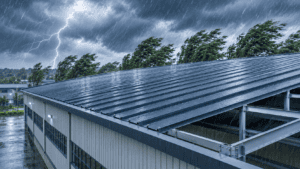
This distinction becomes especially important in regions such as Northeast India, where roofs may face heavy monsoon showers, wind-driven rain and prolonged periods of moisture. Even a strong, high-quality roofing sheet can develop leaks if the joints are poorly aligned, screws are overtightened or ridge gaps are left exposed.
So, what makes a roof genuinely leak-resistant?
The answer lies in the details of installation and product selection. From choosing the right trapezoidal profile to using self-drilling screws with EPDM washers and sealing vulnerable joints, every component has a role to play.
At Dura Roof, roofing solutions include colour-coated PPGL and PPGI profile sheets, standing seam systems, purlins and purpose-designed roofing accessories. Understanding how these components work can help homeowners, contractors and commercial property owners make better roofing decisions.
What Actually Makes a Roofing Sheet Waterproof?
A roof does not become waterproof just because its metal surface is coated or rust-resistant. Rainwater usually finds its way inside through weak points such as:
- Incorrectly aligned side or end overlaps.
- Gaps around screw holes and fasteners.
- Poorly sealed ridge and valley joints.
- Inadequate roof slope, causing water to collect.
- Improper flashing around walls, chimneys and roof openings.
- Damaged washers, loose screws or deteriorated sealant.
A reliable waterproof roofing sheet installation must address all these potential entry points.
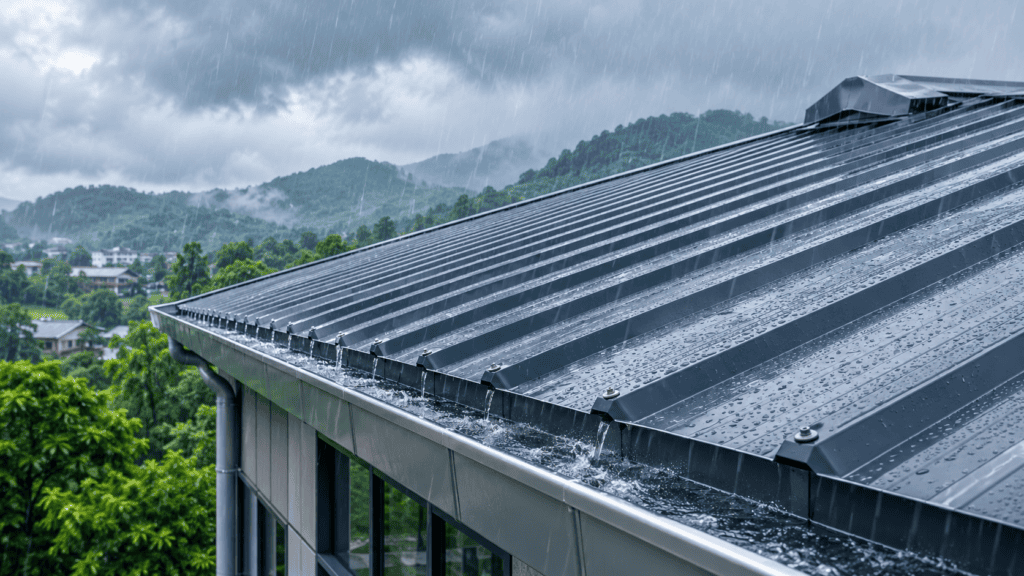
Think of the roof as a connected system. The sheet surface sheds water, the profile guides it towards the gutter, the overlaps prevent water from entering between panels, and the fasteners and sealants protect the joints.
Dura Roof’s product information highlights features such as anti-capillary grooves in its profile sheets, while its accessories range includes ridges, valley gutters, flashings and other components designed to improve weather protection. These details matter because water resistance depends on the complete roof assembly, not only the sheet material.
1. Roofing Sheet Profile: The First Line of Defence Against Rain
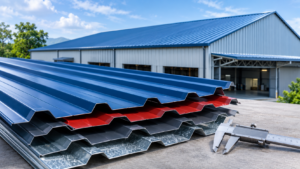
The shape of a roofing sheet influences how efficiently rainwater flows off the roof. A flat-looking surface may appear simple, but the right raised profile can create defined drainage channels and reduce the possibility of water spreading sideways.
Why does the profile matter?
A profiled metal sheet generally has raised ribs and lower pans. These features help:
- Direct rainwater towards the eaves.
- Improve the sheet’s structural stiffness.
- Separate water channels from fastening locations, depending on the design.
- Reduce the risk of water crossing between adjacent drainage paths.
The profile must also be suitable for the roof’s slope, sheet length, rainfall conditions and supporting structure.
Is a trapezoidal roofing sheet better for drainage?
A trapezoidal roofing sheet can offer effective water drainage because its raised ribs and defined pans guide rainwater towards the roof edge. However, its performance depends on rib height, pan width, roof pitch, rainfall intensity and the length of the roof run.
A deeper profile is not automatically suitable for every project. The selected profile must have adequate drainage capacity for the building’s design and local weather conditions.
Dura Roof offers PPGL and PPGI trapezoidal profile sheets, alongside other roofing solutions. Its product range also includes Dura Seam, a standing seam system with concealed fasteners. The choice between these systems should depend on the roof design, appearance, installation requirements and weatherproofing expectations.
The practical takeaway: Do not select a profile based only on appearance or price. Ask the supplier or roofing professional whether the profile is suitable for your roof pitch and expected rainfall.
2. Roofing Sheet Overlap: How Much Is Needed to Stop Leakage?
Even when individual sheets are waterproof, rainwater can enter through the joints where two panels meet. This is why roofing sheet overlap is one of the most important parts of installation.
There are two common types of overlap:
Side overlap: The area where the side edge of one sheet overlaps the adjacent sheet.
End overlap: The area where the end of one sheet overlaps another sheet along the direction of the roof slope.
Both need to be planned according to the sheet profile and installation specifications.
How much roofing sheet overlap is required?
There is no single overlap measurement that applies to every roofing sheet.
The correct roofing sheet overlap depends on:
- The manufacturer’s profile design.
- Roof pitch and slope.
- Sheet length and installation direction.
- Exposure to wind-driven rain.
- Whether the joint is a side lap or an end lap.
- The presence of anti-capillary grooves or other joint details.
For example, a low-pitched roof may need more careful lap detailing because water moves away more slowly. End laps are particularly important because water can be drawn into an incorrectly sealed joint through capillary action.
A metal roofing installation guide from the New Zealand Metal Roofing Manufacturers Association recommends avoiding end laps where possible. Where they cannot be avoided, it describes sealing the lap with a double bead of sealant or suitable closed-cell tape to reduce water entry through capillary action.
What should installers check?
- Align the sheets correctly before fixing them.
- Ensure side laps fit snugly without unnecessary gaps.
- Follow the manufacturer’s recommended overlap direction.
- Use the specified sealant or tape where required.
- Avoid placing end laps in vulnerable locations where the design permits.
- Inspect every joint before completing the installation.
Dura Roof’s FAQ identifies anti-capillary grooves in its profile sheets as a feature intended to help prevent leakage. These grooves are useful design details, but correct alignment, overlap and installation remain essential.
Important: Do not rely on a generic overlap measurement found online. Ask Dura Roof or your roofing installer for the recommended side-lap and end-lap details for the exact sheet profile being used.
3. Why Self-Drilling Screws with Washers Matter
A roofing sheet may have a strong protective coating, but every screw penetration creates a potential entry point for water.
This is where self-drilling screws with washers become important.
These fasteners secure the roofing sheet to the supporting purlins or structure. Their washers create a sealing surface around the screw head, helping prevent rainwater from entering through the fastening point.
What makes a good roofing screw?
A suitable roofing fastener should have:
- A material and coating compatible with the roofing sheet.
- Adequate length and thread engagement for the supporting structure.
- A washer designed for outdoor roofing applications.
- Corrosion resistance appropriate to the installation environment.
- The correct drill point and fastening capacity for the substrate.
Why are EPDM washers recommended?
EPDM is a synthetic rubber commonly used in weather-resistant sealing applications. An EPDM washer sits beneath the screw head and compresses against the roofing sheet when the screw is installed correctly.
It helps close the small gap around the screw penetration.
However, the washer only works effectively when the screw is installed with the correct pressure.
Overtightening can damage the washer. It may become distorted, split or lose its ability to seal properly.
Undertightening can also cause leakage. A loose screw may leave a gap between the washer and the sheet, allowing water to enter.
The goal is to compress the washer enough to create a seal without crushing or deforming it.
Dura Roof‘s accessories information specifically mentions self-drilling and tapping screws with EPDM washers for fixing its roofing accessories. This is an important detail to discuss when planning the fastener specifications for a project.
4. Roofing Sheet Sealant: Protecting Joints, Ridges and Vulnerable Areas
Even a carefully installed roof can have small gaps at joints, corners and intersections. A suitable roofing sheet sealant helps protect these areas against water penetration.
However, sealant should support correct roofing design and installation, not replace it.
Which roofing sheet sealant works best?
The right sealant depends on the joint, roofing material, exposure conditions and manufacturer’s recommendations.
Common options include:
Neutral-cure silicone sealant: Often used for suitable metal roofing joints and accessories. It is important to choose a product compatible with the sheet’s coating and surrounding materials.
Butyl sealant tape: A flexible sealing tape commonly used at selected overlaps and flashing joints. It can provide a continuous seal when installed on clean, dry surfaces.
Closed-cell foam closures: Profile-matched closure strips help close gaps beneath ridge caps and at eaves or other openings. They should be selected to match the sheet profile and installed with the specified sealing method.
Where should sealant be applied?
Pay particular attention to:
- Side and end laps, wherever the system requires sealing.
- Ridge cap joints.
- Valley intersections.
- Roof-to-wall connections.
- Flashing joints.
- Openings around suitable roof penetrations.
The sealant must be applied in the correct location and quantity. A random layer of silicone over an already leaking joint may provide only temporary relief.
Dura Roof‘s accessories page mentions neutral-cure silicon rubber sealants and masking tapes for long-lasting leakage-resistant joints. It also lists accessories such as ridge caps, valley gutters, apron flashing, L-flashing and barge caps to address different roof intersections.
Before selecting a sealant, confirm its compatibility with the roofing sheet coating and the specific joint. Follow the sealant manufacturer’s surface preparation, application and curing instructions.
5. Ridge Caps, Flashings and Gutters: Small Components That Prevent Big Problems
Many roof leaks do not begin in the middle of a sheet. They occur where two roof sections meet or where the roof connects with a wall, chimney or other structure.
These areas need properly designed accessories.
Ridge caps
A ridge cap covers the peak where two sloping roof surfaces meet. Without suitable ridge detailing and closures, rainwater can enter through the gap beneath the cap.
Valley gutters
A valley is formed where two sloping roof sections meet internally. It collects water from both sides, so it needs sufficient capacity and carefully sealed connections.
Apron and L-flashing
These components protect roof-to-wall intersections and other changes in direction. Correct installation helps direct water away from vulnerable joints.
Gutters and downpipes
Even a well-installed roof can face water-related problems if its drainage system cannot handle the runoff. Gutters and downpipes should be sized and positioned to carry rainwater away efficiently.
Dura Roof offers a range of roofing accessories, including ridges, valley gutters, apron flashing, L-flashing, corner trims, barge caps and gutters. Selecting compatible accessories helps create a more complete roofing system rather than treating each joint as a separate problem.
6. Roof Slope and Drainage: Why a Good Profile Still Needs the Right Pitch
Imagine installing a high-quality roofing sheet on a roof that is almost flat. During heavy rainfall, water may move too slowly, collect around joints or place additional pressure on vulnerable areas.
This is why roof pitch matters.
The slope determines how quickly water flows towards the eaves. Profile geometry also affects how much water the roof can carry without overflowing its drainage channels.
The New Zealand Metal Roofing Manufacturers Association explains that runoff capacity depends on rainfall intensity, catchment area, roof pitch and profile geometry. Its technical guidance also shows that minimum recommended pitches differ by roofing profile.
These figures are not universal specifications for Indian projects. The correct roof pitch must be confirmed against the selected manufacturer’s installation instructions and the building’s design conditions.
For a building in a high-rainfall region, ask the roofing professional to consider:
- Local rainfall intensity.
- Roof length and width.
- Sheet profile and rib height.
- Gutter capacity and downpipe positions.
- Wind-driven rain exposure.
- The roof’s minimum recommended pitch.
Dura Roof’s range includes different roofing profiles and accessories, making it important to discuss the complete roof design before finalising the product.
7. Common Installation Mistakes That Can Cause Roof Leakage
Even a premium roofing sheet can develop problems when installation details are overlooked.
Here are some common mistakes worth avoiding:
| Installation mistake | Why it can cause leakage |
|---|---|
| Incorrect sheet overlap | Creates gaps or allows water to enter between panels |
| Poor screw placement | Leaves vulnerable fastening points exposed |
| Overtightened screws | Can damage or distort the sealing washer |
| Loose fasteners | May allow water through the screw penetration |
| Missing ridge closures | Leaves gaps beneath the ridge cap |
| Incompatible sealant | May fail to bond or remain durable on the surface |
| Insufficient roof slope | Slows drainage and increases water exposure at joints |
| Poor gutter planning | Can cause overflow and water accumulation |
A professional installation should include a final inspection of overlaps, fasteners, ridge caps, flashings, gutters and drainage paths.
For long-term performance, periodic inspections are also useful. Check for loose screws, damaged washers, deteriorated sealant, blocked gutters and any visible corrosion or coating damage.
8. Choosing a Waterproof Roofing Sheet: What Should Buyers Ask Before Purchasing?
Before purchasing roofing material for a home, factory, warehouse or commercial building, look beyond the quoted price per square foot.
Ask the supplier these practical questions:
- What is the sheet profile? Understand its rib design, drainage characteristics and suitability for your roof pitch.
- What material and coating are being supplied? Confirm the grade, thickness and coating specifications.
- What overlap is recommended? Ask for the manufacturer’s side-lap and end-lap instructions.
- Which fasteners should be used? Confirm screw type, washer material and fixing pattern.
- Which accessories are available? Check for compatible ridge caps, gutters, valley gutters and flashings.
- What installation support is provided? Clarify who will handle measurements, installation and inspection.
- What maintenance is required? Understand how to keep the roof and drainage system in good condition.
Dura Roof offers colour-coated PPGL and PPGI roofing sheets, Dura Mini, Dura Seam, Dura Liner and roofing accessories. The company states that it has over 40 years of experience in the steel industry and serves projects across Northeast and Eastern India.
For buyers comparing roofing solutions, Dura Roof can be a useful starting point for discussing profile selection, sheet requirements and compatible accessories. The final product and installation specifications should always be matched to the project.
Why Consider Dura Roof for Your Roofing Requirements?
A reliable roof needs the right combination of material, profile, accessories and installation quality. Choosing each component separately without checking compatibility can create avoidable problems later.
Dura Roof provides a range of roofing solutions for residential, commercial and industrial applications.
Its product range includes:
- Dura PPGL and PPGI sheets: Colour-coated profile roofing options.
- Dura Mini: Narrow-profile sheets for selected facade and building applications.
- Dura Seam: A concealed-fastener standing seam roofing system.
- Dura Liner: A profile solution for wall and ceiling applications.
- Dura Purlins: Supporting components for roofing structures.
- Roofing accessories: Ridge caps, valley gutters, flashings, gutters and other components.
Dura Roof’s published product information describes anti-capillary grooves in its profile sheets and highlights the concealed fastening design of its standing seam system. Its accessories range also identifies EPDM-washer fasteners and compatible sealant products as part of its roofing approach.
For a new roof or replacement project, discuss the building’s dimensions, roof slope, exposure to rainfall and intended use with the Dura Roof team. This can help you identify a suitable roofing configuration instead of choosing a sheet based on appearance alone.
Explore Dura Roof’s roofing solutions: https://duraroof.in/
Enquiry: +91 98540 14100
Email: roofings@duraroof.co.in
Final Thoughts: A Leak-Resistant Roof Is Built Through the Details
A dependable waterproof roofing sheet system is the result of several elements working together. The profile guides rainwater, the roof slope supports drainage, overlaps protect the joints, fasteners secure the sheets and washers seal screw penetrations. Sealants, ridge caps, flashings and gutters protect the areas where leakage is most likely to occur.
There is no single product feature that can compensate for poor installation. Even a premium sheet needs the correct fixing pattern, compatible accessories and regular maintenance.
When planning your next roofing project, consider the complete system rather than focusing only on the sheet price. With its range of roofing profiles, standing seam solutions and accessories, Dura Roof offers options worth exploring for residential, commercial and industrial roofing requirements.
Frequently Asked Questions (FAQs)
1. How much roofing sheet overlap is needed to stop rainwater seepage?
There is no universal overlap measurement because it depends on the sheet profile, roof pitch, rainfall exposure and manufacturer’s specifications. Dura Roof recommends discussing the exact side-lap and end-lap requirements for the selected profile before installation. Correct alignment and suitable joint sealing are just as important as the overlap distance.
2. Why do self-drilling screws with washers matter for a leak-free roof?
Self-drilling screws secure roofing sheets to the supporting structure, while their washers help seal the screw penetration. Dura Roof’s accessories information specifies self-drilling and tapping screws with EPDM washers for its accessories. Correct tightening is essential because overtightening can damage the washer and undertightening can leave gaps.
3. Which roofing sheet sealant works best at joints and ridge lines?
The best option depends on the joint design and compatibility with the roofing material. Neutral-cure silicone, butyl sealing tape and profile-matched closure strips are used in different roofing applications. Dura Roof mentions neutral-cure silicon rubber sealants and masking tapes for leakage-resistant joints. Always follow the product and installation specifications for the particular roof.
4. Is a trapezoidal roofing sheet better at draining water than flatter profiles?
A trapezoidal profile can guide rainwater through its raised ribs and defined pans, but drainage also depends on roof pitch, rib geometry, rainfall and roof length. Dura Roof offers PPGL and PPGI trapezoidal profile sheets, which buyers can evaluate according to their project requirements and the manufacturer’s recommendations.