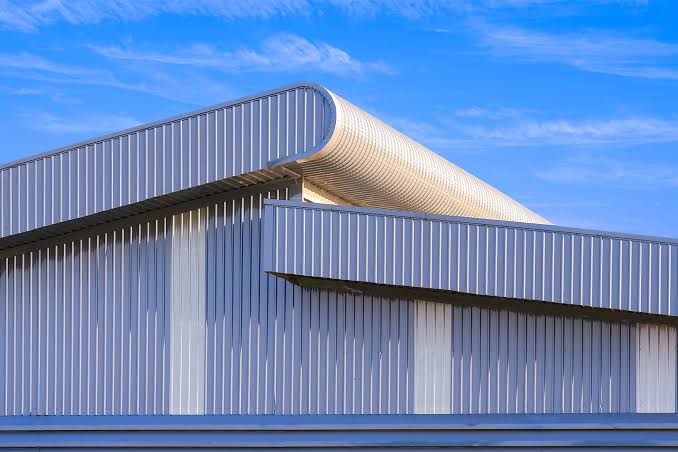
A roof does more than protect a building from rain and sun. It can influence the building’s identity, appearance, functionality, and even the way people remember it.
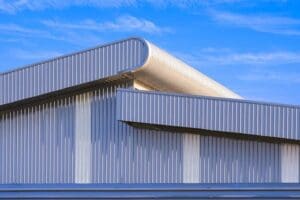
That is why architects and builders are increasingly exploring roof profiles that go beyond conventional straight slopes. Curved roofing sheet solutions can introduce flowing lines, distinctive silhouettes, and modern architectural character while still serving the fundamental purpose of a roof.
From entrance canopies and commercial buildings to industrial structures and large public spaces, curved roofs can transform an otherwise ordinary structure into a visually distinctive landmark.
But aesthetics aren’t the only consideration.
Before choosing a curved roofing solution, it’s important to understand where it is typically used, how it differs from other curved profiles, how installation works, and how its cost compares with conventional types of roofing materials.
For projects across Assam and the Northeast, Dura Roof offers roofing solutions that help builders and architects explore both functional and visually distinctive roofing designs.
What Is a Curved Roofing Sheet?
A curved roofing sheet is a roofing sheet manufactured or formed into a curved profile rather than remaining completely flat or straight.
The curvature can be incorporated into the roofing design to create:
- Arched roofs
- Curved canopies
- Barrel-style roof forms
- Sweeping architectural profiles
- Curved entrances
- Distinctive commercial facades
- Large-span architectural structures
The exact manufacturing and installation process depends on the roofing system, sheet material, profile, curvature, and project requirements.
Unlike a conventional sloping roof, where straight sheets are installed over an angled framework, curved roofing requires the roofing material and supporting structure to work together around the intended geometry.
Where Are Curved Roofing Sheets Typically Used?
Curved roofing isn’t necessarily suitable for every building. It is generally considered where the architectural form or functional requirements justify a curved roof profile.
1. Commercial Buildings
Shopping complexes, showrooms, restaurants, office buildings, and commercial developments can use curved roofs to create a more distinctive exterior.
A curved entrance canopy, for example, can become an architectural feature rather than simply a functional covering.
2. Industrial Buildings
Certain factories, warehouses, workshops, and industrial structures can incorporate curved roofing forms where the structural and operational requirements allow it.
However, not every industrial building needs a curved roof. For many warehouses, conventional industrial roofing sheets may remain more practical.
3. Public and Institutional Buildings
Transport facilities, sports facilities, community buildings, exhibition spaces, and other public structures may use curved roofing to create a strong architectural identity.
4. Canopies and Entrance Structures
One of the more visually effective applications is a curved canopy over an entrance, walkway, parking area, or reception zone.
Because the curved roof becomes highly visible from the ground, it can significantly change the appearance of an otherwise straightforward structure.
5. Architectural Feature Roofs
Curved roofing can also be used selectively as an architectural element rather than across the entire building.
For example, a building might use a conventional roof for the main structure while incorporating a curved roofing feature at the entrance.
Curved Roofing Sheet vs Curved Profile Sheet: What’s the Difference?
The terms curved roofing sheet and curved profile sheet can sometimes be used interchangeably, but they can refer to slightly different aspects of a roofing product.
A curved roofing sheet generally describes the overall curved form of the roofing material.
A curved profile sheet may refer more specifically to a profiled roofing sheet that has been manufactured or formed into a particular curved geometry.
In practical terms, the distinction depends on the manufacturer’s product terminology and the roofing system being specified.
| Feature | Curved Roofing Sheet | Curved Profile Sheet |
|---|---|---|
| Main description | Focuses on the sheet’s curved form | Focuses on the profiled sheet formed into a curve |
| Application | Architectural and functional roofing | Curved applications requiring a profiled sheet |
| Shape | Can vary according to design | Defined by the profile and curvature |
| Selection | Depends on project geometry | Depends on profile, span and curvature |
| Installation | Requires appropriate structural planning | Requires compatible support and installation |
When discussing a project with a roofing manufacturer such as Dura Roof, it is useful to provide the required span, curvature, roof geometry, application, and structural details rather than relying only on the term “curved sheet.”
Do Curved Roofing Sheets Come Pre-Curved?
This is one of the most important practical questions when considering a curved roof.
The answer is: it depends on the roofing system and manufacturing process.
Some roofing solutions can be manufactured or formed to the required curvature before installation. Other systems may involve forming or shaping the roofing material as part of the installation process.
The feasibility depends on factors such as:
- Sheet material
- Sheet profile
- Required radius
- Sheet thickness
- Coating
- Roof design
- Manufacturing capabilities
- Installation method
This means you shouldn’t assume that every colour coated roofing sheet can simply be curved on-site.
Do Colour Coated Roofing Sheets Come Pre-Curved or Shaped On-Site?
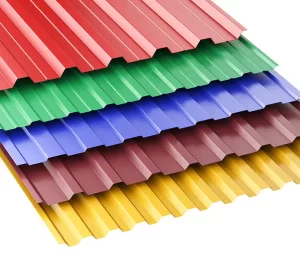
Colour coated roofing sheets are available in different profiles and applications, but whether a particular sheet can be supplied curved or formed depends on the product and manufacturer.
For a curved architectural project, the roofing supplier needs to assess the required curvature and manufacturing method.
Depending on the roofing system, the sheet may be:
- Manufactured specifically for the required curved application
- Formed using an appropriate process
- Supplied in a profile designed for curved installation
- Combined with a supporting structure designed around the sheet geometry
On-site forming should not be assumed to be suitable for every sheet. Improper bending or forming can affect the sheet profile, coating, appearance, or performance.
For this reason, Dura Roof can be consulted early in the design process when a project requires a curved roofing solution.
Are Curved Roofing Sheets Harder to Install?
Curved roofing sheets aren’t necessarily “difficult” to install, but they can require more careful planning and specialised installation considerations than a straightforward pitched roof.
A conventional roof generally involves relatively simple planar surfaces.
A curved roof introduces additional geometric considerations.
Installers may need to account for:
- Curvature and radius
- Sheet alignment
- Supporting structure
- Fastener positioning
- Sheet overlaps
- Edge details
- Flashing
- Water drainage
- Access and handling
- Manufacturer-specific installation requirements
This means installation should ideally be planned before the structural work begins.
Why Installation Planning Matters for Curved Roofs
A curved roof isn’t something that should be improvised after the building structure has already been completed.
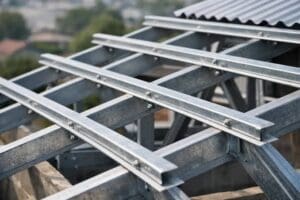
The structural framework needs to accommodate the intended roof geometry.
The roofing manufacturer, structural designer, fabricator, and installer may need to coordinate on:
Design → Structural support → Sheet profile → Curvature → Fixing → Flashing → Drainage
Good coordination can reduce installation problems and help achieve the intended architectural appearance.
Curved Roofing Sheets for Industrial Buildings
When people think about industrial roofing sheets, warehouses and factories are usually the first examples that come to mind.
So, are curved roofs common in industrial roofing?
They can be used, but their suitability depends on the structure.
Industrial buildings generally prioritise factors such as:
- Large spans
- Structural efficiency
- Weather protection
- Drainage
- Durability
- Maintenance
- Installation efficiency
- Cost
A curved roof may be considered when architectural appearance, structural requirements, or the building’s intended function justify it.
For a standard warehouse where cost efficiency and straightforward construction are priorities, conventional roofing profiles may be more practical.
For a high-visibility commercial-industrial facility, exhibition building, terminal, showroom, or architecturally distinctive structure, a curved roof may offer additional design value.
Are Curved Designs Common in Industrial Roofing Sheets for Warehouses?
Curved designs can be used in warehouse and industrial structures, but they are not automatically the default choice.
Traditional industrial roofing systems are often designed around practical considerations such as span, drainage, structural loads, installation time, and overall project cost.
Curved roofing may become attractive when the project calls for:
- A distinctive architectural appearance
- A large entrance canopy
- A curved building profile
- A specialised roof geometry
- A combination of aesthetics and function
For a warehouse project, the decision should therefore come from the building’s actual requirements rather than simply choosing a curved roof because it looks modern.
How Do Curved Sheets Compare With Standard Types of Roofing Materials in Cost?
Cost is one of the most important considerations when choosing between curved and conventional roofing.
There isn’t one fixed price difference because roofing costs depend on many variables, including:
- Material
- Sheet thickness
- Profile
- Coating
- Curvature
- Radius
- Quantity
- Manufacturing requirements
- Structural support
- Installation complexity
- Transportation
- Project location
A curved roofing sheet can involve additional manufacturing or installation considerations compared with a standard straight sheet. The supporting structure may also require more detailed planning.
Therefore, comparing only the per-sheet price can give an incomplete picture.
The better comparison is the total installed roofing cost.
Curved Roofing vs Conventional Roofing: What Should You Compare?
| Factor | Curved Roofing | Conventional Roofing |
|---|---|---|
| Architectural appearance | Distinctive and visually prominent | Usually simpler |
| Design flexibility | Can create flowing forms | More limited to conventional geometry |
| Manufacturing | May require project-specific considerations | Often more straightforward |
| Installation | May require additional planning | Generally simpler for standard roofs |
| Structural design | Requires coordination with curved geometry | Often more conventional |
| Cost | Depends heavily on design and fabrication | Often easier to estimate |
| Maintenance | Depends on design and accessibility | Depends on material and roof configuration |
A curved roof may have a higher initial cost in some projects, but the value of the design should be considered alongside the project’s architectural objectives and functional requirements.
Can Curved Roofing Be Practical, Not Just Beautiful?
Absolutely.
Although curved roofing is often selected for visual impact, its usefulness doesn’t have to be purely aesthetic.
Depending on the design, curvature can influence:
- Water movement
- Building appearance
- Interior volume
- Natural visual flow
- Structural form
- Entrance protection
- Overall architectural identity
However, these benefits depend on the specific roof design.
A curved roof should therefore be evaluated based on both design intent and engineering requirements.
Curved Roofing in Assam and the Northeast
Roofing in Assam and the Northeast requires careful attention to rainfall, humidity, drainage, and long-term exposure to weather.
For curved roofing, drainage deserves particular attention because the shape of the roof influences how water travels across its surface.
A well-designed curved roof should account for:
- Rainwater flow
- Drainage points
- Roof edges
- Flashing
- Junctions
- Fastening
- Structural support
- Maintenance access
This is another reason why choosing the roofing system and planning the installation early can make a difference.
At Dura Roof, roofing requirements for projects in the Northeast can be considered with attention to the region’s demanding weather conditions and practical construction requirements.
Why Curved Roofing Can Turn a Building Into a Landmark
Architecture is often remembered through shape.
A curved entrance, sweeping canopy, or distinctive roofline can give a building an identity that a standard rectangular structure may not have.
For commercial properties, this can be especially useful.
A distinctive roof can help a building:
- Stand out from surrounding structures
- Create a recognisable entrance
- Strengthen architectural identity
- Make the facade more visually memorable
- Complement modern architectural designs
This is why curved roofing can be more than a roofing decision—it can become part of the building’s visual identity.
Why Choose Dura Roof for Curved Roofing Solutions?
Choosing a curved roof requires more than selecting a sheet with an attractive appearance.
The curvature, sheet profile, structural support, fastening system, flashing, drainage, and installation process all need to work together.
Dura Roof provides roofing solutions with a focus on practical requirements for projects across Assam and the Northeast.
Whether you’re planning:
- A commercial building
- A warehouse
- An industrial facility
- A showroom
- An entrance canopy
- A public building
- An architecturally distinctive structure
Dura Roof can be part of the conversation from the planning stage, helping you evaluate the roofing requirements before installation begins.
For projects involving curved roofing sheet applications, early coordination can help determine what type of profile, curvature, support structure, and installation approach is appropriate.
Build Beyond the Ordinary with Dura Roof
A conventional roof can provide reliable protection. A thoughtfully designed curved roof can do that while also becoming one of the most recognisable elements of a building.
But the best results come from combining design ambition with practical roofing considerations.
Dura Roof helps bring that approach together by focusing on roofing solutions that consider appearance, application, durability, installation, and the requirements of the building.
If you’re planning a project where the roof needs to be more than just a protective covering, explore what a curved roofing sheet can bring to the design.
Create a roof that protects the building—and gives it an identity—with Dura Roof.
Frequently Asked Questions
1. What’s the difference between a curved roofing sheet and a curved profile sheet?
A curved roofing sheet generally describes roofing material formed into a curved shape, while curved profile sheet can refer more specifically to a profiled roofing sheet manufactured or formed with a particular curvature. Exact terminology can vary between manufacturers and roofing systems.
2. Do colour coated roofing sheets come pre-curved or shaped on-site?
It depends on the roofing product and manufacturer. Some colour coated roofing sheets may be manufactured or formed specifically for curved applications, while other systems may use an appropriate forming process. Not every colour-coated sheet should be curved on-site, as improper forming can affect its profile or coating.
3. Are curved designs common in industrial roofing sheets for warehouses?
Curved designs can be used in industrial buildings and warehouses, but they are not necessarily the standard choice. Conventional industrial roofing sheets may be preferred for straightforward warehouse applications, while curved designs can be considered where architectural appearance or specific structural requirements justify them.
4. How do curved sheets compare to standard types of roofing materials in cost?
There is no universal price difference. Curved roofing can involve additional manufacturing, structural, transportation, and installation considerations. The most useful comparison is the total installed project cost rather than the price of an individual sheet.
5. Where are curved roofing sheets typically used?
Curved roofing sheets can be used for commercial buildings, entrance canopies, industrial facilities, public buildings, showrooms, warehouses, and architecturally distinctive structures where a curved roof profile suits the design.
6. Are curved roofing sheets harder to install?
They can require more planning than conventional straight roofing because the curvature, structural support, sheet alignment, fastening, flashing, and drainage all need to be coordinated. With appropriate design and installation planning, curved roofing can be successfully incorporated into suitable projects.
7. Are curved roofing sheets suitable for the Northeast?
They can be suitable for appropriate projects, but the roof design should account for local rainfall, drainage, humidity, structural requirements, and installation conditions. Dura Roof can help customers evaluate roofing requirements for projects in Assam and the Northeast.
8. Can curved roofing be used for a warehouse?
Yes, depending on the building’s structural and functional requirements. Curved roofing can be considered for warehouses where the architectural design or specific project requirements justify it. Conventional industrial roofing systems may be more appropriate for other warehouse applications.
9. Does Dura Roof provide curved roofing solutions?
Dura Roof offers roofing solutions for different building requirements. For a project requiring a curved roofing sheet, the specific profile, curvature, material, structural support, and installation requirements should be discussed with the roofing provider during the planning stage.
10. What should I check before choosing a curved roofing sheet?
Consider the required curvature, sheet profile, material, thickness, coating, structural support, fastening method, drainage, flashing, installation requirements, maintenance access, and total project cost. Discussing these requirements with Dura Roof early in the design process can help determine whether a curved roofing solution is suitable for the project.